Slowing Down the Clock a Review of Experimental Studies Investigating Psychological Time Dilation
The written report of time perception or chronoception is a field inside psychology, cognitive linguistics[one] and neuroscience that refers to the subjective experience, or sense, of time, which is measured by someone'south own perception of the duration of the indefinite and unfolding of events.[2] [3] The perceived fourth dimension interval between two successive events is referred to as perceived duration. Though directly experiencing or agreement another person's perception of time is not possible, perception can be objectively studied and inferred through a number of scientific experiments. Some temporal illusions help to expose the underlying neural mechanisms of time perception.
Pioneering piece of work, emphasizing species-specific differences, was conducted by Karl Ernst von Baer.[four]
Theories [edit]
Time perception is typically categorized in 3 distinct ranges, considering dissimilar ranges of elapsing are candy in different areas of the encephalon:[5]
- Sub-second timing or millisecond timing
- Interval timing or seconds-to-minutes timing
- Circadian timing
At that place are many theories and computational models for time perception mechanisms in the encephalon. William J. Friedman (1993) contrasted two theories of the sense of time:[6] [vii] [8]
- The force model of time retentivity. This posits a retentivity trace that persists over time, by which one might estimate the historic period of a retentiveness (and therefore how long ago the event remembered occurred) from the forcefulness of the trace. This conflicts with the fact that memories of recent events may fade more quickly than more distant memories.
- The inference model suggests the time of an consequence is inferred from information about relations between the result in question and other events whose date or time is known.
Another hypothesis involves the brain's subconscious tallying of "pulses" during a specific interval, forming a biological stopwatch. This theory proposes that the brain can run multiple biological stopwatches independently depending on the type of tasks existence tracked. The source and nature of the pulses is unclear.[nine] They are equally yet a metaphor whose correspondence to brain anatomy or physiology is unknown.[x]
Philosophical perspectives [edit]
The specious present is the fourth dimension elapsing wherein a state of consciousness is experienced as being in the nowadays.[11] The term was first introduced by the philosopher Due east. R. Dirt in 1882 (Due east. Robert Kelly),[12] [xiii] and was further developed by William James.[xiii] James defined the specious present to exist "the prototype of all conceived times... the short elapsing of which we are immediately and incessantly sensible". In "Scientific Idea" (1930), C. D. Broad farther elaborated on the concept of the specious nowadays and considered that the specious nowadays may exist considered as the temporal equivalent of a sensory datum.[thirteen] A version of the concept was used by Edmund Husserl in his works and discussed further by Francisco Varela based on the writings of Husserl, Heidegger, and Merleau-Ponty.[xiv]
Neuroscientific perspectives [edit]
Although the perception of time is not associated with a specific sensory system, psychologists and neuroscientists advise that humans do have a system, or several complementary systems, governing the perception of time.[fifteen] Time perception is handled past a highly distributed system involving the cerebral cortex, cerebellum and basal ganglia.[xvi] I item component, the suprachiasmatic nucleus, is responsible for the cyclic (or daily) rhythm, while other cell clusters appear to be capable of shorter (ultradian) timekeeping. At that place is some show that very short (millisecond) durations are processed by dedicated neurons in early sensory parts of the brain.[17] [eighteen]
Warren Meck devised a physiological model for measuring the passage of fourth dimension. He found the representation of time to be generated past the oscillatory activity of cells in the upper cortex. The frequency of these cells' activity is detected by cells in the dorsal striatum at the base of the forebrain. His model separated explicit timing and implicit timing. Explicit timing is used in estimating the duration of a stimulus. Implicit timing is used to estimate the corporeality of time separating ane from an impending event that is expected to occur in the nigh future. These two estimations of time do not involve the same neuroanatomical areas. For example, implicit timing often occurs to achieve a motor task, involving the cerebellum, left parietal cortex, and left premotor cortex. Explicit timing oft involves the supplementary motor surface area and the right prefrontal cortex.[10]
Two visual stimuli, inside someone's field of view, can exist successfully regarded as simultaneous up to five milliseconds.[19] [20] [21]
In the popular essay "Brain Time", David Eagleman explains that different types of sensory information (auditory, tactile, visual, etc.) are processed at different speeds by different neural architectures. The brain must learn how to overcome these speed disparities if information technology is to create a temporally unified representation of the external world:
if the visual brain wants to get events correct timewise, information technology may have merely i choice: wait for the slowest information to arrive. To accomplish this, it must wait nearly a tenth of a second. In the early days of tv broadcasting, engineers worried about the trouble of keeping sound and video signals synchronized. So they accidentally discovered that they had effectually a hundred milliseconds of slop: As long every bit the signals arrived inside this window, viewers' brains would automatically resynchronize the signals". He goes on to say that "This brief waiting period allows the visual organization to discount the diverse delays imposed by the early stages; even so, it has the disadvantage of pushing perception into the past. At that place is a distinct survival reward to operating as shut to the present as possible; an creature does non desire to live besides far in the by. Therefore, the tenth-of-a-2d window may be the smallest delay that allows higher areas of the brain to account for the delays created in the commencement stages of the system while still operating nigh the border of the present. This window of filibuster means that awareness is retroactive, incorporating data from a window of time after an event and delivering a delayed interpretation of what happened."[22]
Experiments take shown that rats can successfully estimate a time interval of approximately 40 seconds, despite having their cortex entirely removed.[23] This suggests that fourth dimension estimation may be a low level process.[24]
Ecological perspectives [edit]
In recent history, ecologists and psychologists have been interested in whether and how time is perceived by non-human animals, besides every bit which functional purposes are served by the ability to perceive time. Studies have demonstrated that many species of animals, including both vertebrates and invertebrates, have cerebral abilities that permit them to estimate and compare fourth dimension intervals and durations in a similar way to humans.[25]
There is empirical prove that metabolic rate has an impact on animals' ability to perceive time.[26] In general, it is truthful within and beyond taxa that animals of smaller size (such as flies), which have a fast metabolic rate, feel time more slowly than animals of larger size, which take a slow metabolic rate.[27] [28] Researchers suppose that this could be the reason why small-bodied animals are generally improve at perceiving time on a small calibration, and why they are more agile than larger animals.[29]
Time perception in vertebrates [edit]
Examples in fish [edit]
In a lab experiment, goldfish were conditioned to receive a light stimulus followed shortly by an aversive electric stupor, with a constant time interval between the 2 stimuli. Test subjects showed an increment in general activity around the time of the electrical shock. This response persisted in further trials in which the light stimulus was kept but the electric shock was removed.[thirty] This suggests that goldfish are able to perceive time intervals and to initiate an avoidance response at the time when they expect the pitiful stimulus to happen.
In two separate studies, golden shiners and dwarf inangas demonstrated the ability to associate the availability of nutrient sources to specific locations and times of day, chosen time-place learning.[31] [32] In contrast, when tested for time-place learning based on predation take a chance, inangas were unable to associate spatiotemporal patterns to the presence or absenteeism of predators.
Examples in birds [edit]
When presented with the choice between obtaining food at regular intervals (with a fixed delay between feedings) or at stochastic intervals (with a variable delay between feedings), starlings can discriminate between the 2 types of intervals and consistently prefer getting food at variable intervals. This is true whether the total amount of food is the same for both options or if the full amount of food is unpredictable in the variable option. This suggests that starlings have an inclination for risk-decumbent behavior.[33]
Pigeons are able to discriminate between unlike times of mean solar day and show time-place learning.[34] After training, lab subjects were successfully able to peck specific keys at different times of day (morning or afternoon) in exchange for food, fifty-fifty after their sleep/wake cycle was artificially shifted. This suggests that to discriminate betwixt different times of day, pigeons tin can use an internal timer (or circadian timer) that is independent of external cues.[35] However, a more recent study on time-identify learning in pigeons suggests that for a like task, test subjects will switch to a not-circadian timing mechanism when possible to save energy resources.[36] Experimental tests revealed that pigeons are also able to discriminate between cues of diverse durations (on the club of seconds), but that they are less authentic when timing auditory cues than when timing visual cues.[37]
Examples in mammals [edit]
A study on privately owned dogs revealed that dogs are able to perceive durations ranging from minutes to several hours differently. Dogs reacted with increasing intensity to the return of their owners when they were left lone for longer durations, regardless of the owners' beliefs.[38]
Subsequently being trained with nutrient reinforcement, female person wild boars are able to correctly judge fourth dimension intervals of days by request for food at the end of each interval, but they are unable to accurately judge fourth dimension intervals of minutes with the same training method.[39]
When trained with positive reinforcement, rats can learn to answer to a betoken of a certain duration, but not to signals of shorter or longer durations, which demonstrates that they can discriminate between different durations.[40] Rats have demonstrated fourth dimension-identify learning, and can as well learn to infer correct timing for a specific task by following an order of events, suggesting that they might exist able to utilize an ordinal timing mechanism.[41] Similar pigeons, rats are thought to have the ability to use a cyclic timing mechanism for discriminating time of day.[42]
Fourth dimension perception in invertebrates [edit]

Forager dearest bee flying back to the hive with pollen and nectar.
When returning to the hive with nectar, forager dearest bees demand to know the current ratio of nectar-collecting to nectar-processing rates in the colony. To practice so, they estimate the time it takes them to find a food-storer bee, which volition unload the forage and shop it. The longer it takes them to find one, the busier the food-storer bees are; and therefore the higher the nectar-collecting charge per unit of the colony.[43] Forager bees also assess the quality of nectar by comparison the length of time it takes to unload the fodder: a longer unloading time indicates higher quality nectar. They compare their own unloading time to the unloading time of other foragers present in the hive, and adjust their recruiting behavior accordingly. For instance, beloved bees reduce the duration of their waggle dance if they judge their own yield to exist inferior.[44] Scientists have demonstrated that anesthesia disrupts the circadian clock and impairs the time perception of love bees, equally observed in humans.[45] Experiments revealed that a 6-hour-long general anesthesia significantly delayed the start of the foraging behaviour of honeybees if induced during daytime, but not if induced during night.[46]
Bumble bees can be successfully trained to respond to a stimulus afterward a certain time interval has elapsed (normally several seconds afterwards the starting time point). Studies take shown that they tin also learn to simultaneously time multiple interval durations.[47]
In a single written report, colonies from three species of ants from the genus Myrmica were trained to acquaintance feeding sessions with different times. The trainings lasted several days, where each 24-hour interval the feeding time was delayed by xx minutes compared to the previous day. In all iii species, at the end of the grooming, well-nigh individuals were present at the feeding spot at the right expected times, suggesting that ants are able to estimate the time running, go along in memory the expected feeding time and to human activity anticipatively.[48]
Types of temporal illusions [edit]
A temporal illusion is a distortion in the perception of time. For example:
- estimating time intervals, e.chiliad., "When did you terminal come across your chief care physician?";
- estimating time elapsing, e.grand., "How long were y'all waiting at the doctor's function?"; and
- judging the simultaneity of events (see below for examples).
- Main types of temporal illusions
- Telescoping effect: People tend to recall recent events as occurring further back in time than they actually did (backward telescoping) and distant events as occurring more recently than they actually did (forward telescoping).[49]
- Vierordt's law: Shorter intervals tend to be overestimated while longer intervals tend to be underestimated
- Time intervals associated with more than changes may be perceived every bit longer than intervals with fewer changes
- Perceived temporal length of a given task may shorten with greater motivation
- Perceived temporal length of a given task may stretch when broken up or interrupted
- Auditory stimuli may announced to last longer than visual stimuli[50] [51] [52] [53]
- Fourth dimension durations may appear longer with greater stimulus intensity (e.g., auditory loudness or pitch)
- Simultaneity judgments can exist manipulated past repeated exposure to not-simultaneous stimuli
Kappa effect [edit]
The Kappa consequence or perceptual fourth dimension dilation [54] is a class of temporal illusion verifiable by experiment,[55] wherein the temporal duration betwixt a sequence of consecutive stimuli is thought to exist relatively longer or shorter than its actual elapsed time, due to the spatial/auditory/tactile separation between each consecutive stimuli. The kappa effect can be displayed when considering a journey fabricated in two parts that each take an equal amount of fourth dimension. When mentally comparing these two sub-journeys, the part that covers more than altitude may appear to accept longer than the part covering less altitude, even though they take an equal corporeality of time.
Heart movements and "Chronostasis" [edit]
The perception of space and fourth dimension undergoes distortions during rapid saccadic eye movements.[56] Chronostasis is a type of temporal illusion in which the first impression following the introduction of a new event or task demand to the brain appears to be extended in time.[57] For case, chronostasis temporarily occurs when fixating on a target stimulus, immediately following a saccade (e.g., quick eye movement). This elicits an overestimation in the temporal duration for which that target stimulus (i.e., postsaccadic stimulus) was perceived. This effect can extend apparent durations by upwards to 500 ms and is consistent with the thought that the visual arrangement models events prior to perception.[58] The most well-known version of this illusion is known every bit the stopped-clock illusion, wherein a bailiwick'due south get-go impression of the 2nd-hand motility of an analog clock, subsequent to one's directed attention (i.east., saccade) to the clock, is the perception of a slower-than-normal 2d-paw movement rate (the seconds hand of the clock may seemingly temporarily freeze in place after initially looking at it).[59] [60] [61] [62]
The occurrence of chronostasis extends beyond the visual domain into the auditory and tactile domains.[63] In the auditory domain, chronostasis and elapsing overestimation occur when observing auditory stimuli. One mutual example is a frequent occurrence when making phone calls. If, while listening to the phone's dial tone, inquiry subjects motility the phone from ane ear to the other, the length of time between rings appears longer.[64] In the tactile domain, chronostasis has persisted in inquiry subjects every bit they accomplish for and grasp objects. Afterwards grasping a new object, subjects overestimate the time in which their hand has been in contact with this object.[threescore]
Flash-lag effect [edit]
In an experiment, participants were told to stare at an "x" symbol on a computer screen whereby a moving blue doughnut-like band repeatedly circled the fixed "x" point.[65] [66] [67] Occasionally, the band would brandish a white flash for a separate second that physically overlapped the ring's interior. However, when asked what was perceived, participants responded that they saw the white flash lagging behind the center of the moving ring. In other words, despite the reality that the two retinal images were actually spatially aligned, the flashed object was usually observed to trail a continuously moving object in space — a miracle referred to equally the wink-lag effect.
The first proposed explanation, chosen the "movement extrapolation" hypothesis, is that the visual system extrapolates the position of moving objects but non flashing objects when accounting for neural delays (i.e., the lag time betwixt the retinal image and the observer's perception of the flashing object). The second proposed explanation by David Eagleman and Sejnowski, called the "latency difference" hypothesis, is that the visual system processes moving objects at a faster rate than flashed objects. In the try to disprove the get-go hypothesis, David Eagleman conducted an experiment in which the moving ring of a sudden reverses direction to spin in the other way equally the flashed object briefly appears. If the first hypothesis were correct, we would expect that, immediately following reversal, the moving object would be observed every bit lagging behind the flashed object. All the same, the experiment revealed the opposite — immediately post-obit reversal, the flashed object was observed as lagging behind the moving object. This experimental result supports the "latency departure" hypothesis. A recent study tries to reconcile these different approaches by treating perception as an inference mechanism aiming at describing what is happening at the present time.[68]
Oddball effect [edit]
Humans typically overestimate the perceived duration of the initial and final consequence in a stream of identical events.[69] This oddball effect may serve an evolutionarily adapted "alerting" function and is consistent with reports of time slowing down in threatening situations. The effect seems to be strongest for images that are expanding in size on the retina, in other words, that are "looming" or budgeted the viewer,[seventy] [71] [72] and the effect tin can be eradicated for oddballs that are contracting or perceived to exist receding from the viewer.[71] The effect is also reduced[lxx] or reversed[72] with a static oddball presented among a stream of expanding stimuli.
Initial studies suggested that this oddball-induced "subjective fourth dimension dilation" expanded the perceived elapsing of oddball stimuli past 30–50%[70] but subsequent research has reported more pocket-size expansion of around 10%[72] [73] [74] [75] or less.[76] The direction of the outcome, whether the viewer perceives an increase or a decrease in duration, likewise seems to be dependent upon the stimulus used.[76]
Reversal of temporal lodge judgment [edit]
Numerous experimental findings suggest that temporal order judgments of deportment preceding effects can exist reversed nether special circumstances. Experiments take shown that sensory simultaneity judgments tin can exist manipulated by repeated exposure to not-simultaneous stimuli. In an experiment conducted past David Eagleman, a temporal guild judgment reversal was induced in subjects by exposing them to delayed motor consequences. In the experiment, subjects played diverse forms of video games. Unknown to the subjects, the experimenters introduced a fixed delay between the mouse movements and the subsequent sensory feedback. For instance, a discipline may not meet a motion register on the screen until 150 milliseconds subsequently they had moved the mouse. Participants playing the game rapidly adjusted to the delay and felt as though there was less filibuster between their mouse move and the sensory feedback. Shortly after the experimenters removed the delay, the subjects commonly felt as though the upshot on the screen happened only before they allowable it. This work addresses how the perceived timing of effects is modulated by expectations, and the extent to which such predictions are quickly modifiable.[77]
In an experiment conducted by Haggard and colleagues in 2002, participants pressed a button that triggered a wink of light at a distance, after a slight delay of 100 milliseconds.[78] Past repeatedly engaging in this act, participants had adapted to the delay (i.e., they experienced a gradual shortening in the perceived time interval between pressing the push and seeing the flash of light). The experimenters then showed the flash of lite instantly subsequently the push was pressed. In response, subjects often thought that the flash (the effect) had occurred earlier the button was pressed (the cause). Additionally, when the experimenters slightly reduced the filibuster, and shortened the spatial distance between the button and the flash of calorie-free, participants had oftentimes claimed again to have experienced the outcome before the cause.
Several experiments also suggest that temporal lodge judgment of a pair of tactile stimuli delivered in rapid succession, one to each hand, is noticeably impaired (i.due east., misreported) past crossing the easily over the midline. However, congenitally blind subjects showed no trace of temporal order judgment reversal after crossing the arms. These results advise that tactile signals taken in past the congenitally bullheaded are ordered in time without existence referred to a visuospatial representation. Unlike the congenitally blind subjects, the temporal order judgments of the late-onset blind subjects were dumb when crossing the arms to a similar extent equally non-bullheaded subjects. These results suggest that the associations between tactile signals and visuospatial representation is maintained once it is accomplished during infancy. Some research studies take also found that the subjects showed reduced deficit in tactile temporal lodge judgments when the artillery were crossed behind their back than when they were crossed in front end.[79] [80] [81]
Physiological associations [edit]
Tachypsychia [edit]
Tachypsychia is a neurological condition that alters the perception of time, unremarkably induced by physical exertion, drug utilize, or a traumatic issue. For someone affected past tachypsychia, time perceived by the individual either lengthens, making events appear to slow downwards,[82] or contracts, with objects appearing equally moving in a speeding blur.[83] [84]
Effects of emotional states [edit]
Awe [edit]
Research has suggested the feeling of awe has the power to expand one's perceptions of time availability. Awe tin be characterized every bit an experience of immense perceptual vastness that coincides with an increment in focus. Consequently, it is conceivable that one'south temporal perception would ho-hum downward when experiencing awe.[85] The perception of time tin can differ as people choose betwixt savoring moments and deferring gratification.[86]
Fear [edit]
Possibly related to the oddball result, research suggests that fourth dimension seems to slow downward for a person during dangerous events (such as a car accident, a robbery, or when a person perceives a potential predator or mate), or when a person skydives or bungee jumps, where they're capable of complex thoughts in what would normally be the blink of an centre (See Fight-or-flying response).[87] This reported slowing in temporal perception may take been evolutionarily advantageous because it may take enhanced one'south ability to intelligibly make quick decisions in moments that were of critical importance to our survival.[88] However, even though observers usually report that time seems to accept moved in irksome motion during these events, it is unclear whether this is a role of increased time resolution during the outcome, or instead an illusion created by the remembering of an emotionally salient event.[89]
A strong time dilation effect has been reported for perception of objects that were looming, but not of those retreating, from the viewer, suggesting that the expanding discs — which mimic an approaching object — arm-twist self-referential processes which act to signal the presence of a possible danger.[90] Broken-hearted people, or those in not bad fright, experience greater "fourth dimension dilation" in response to the same threat stimuli due to higher levels of epinephrine, which increases encephalon activity (an adrenaline rush).[91] In such circumstances, an illusion of time dilation could assist an effective escape.[92] [93] When exposed to a threat, three-year-sometime children were observed to exhibit a like tendency to overestimate elapsed fourth dimension.[10] [94]
Research suggests that the effect appears just at the point of retrospective assessment, rather than occurring simultaneously with events as they happened.[95] Perceptual abilities were tested during a frightening experience — a free autumn — by measuring people's sensitivity to flickering stimuli. The results showed that the subjects' temporal resolution was not improved equally the frightening event was occurring. Events appear to take taken longer only in retrospect, possibly because memories were existence more densely packed during the frightening situation.[95]
Other researchers[96] [97] suggest that additional variables could lead to a different land of consciousness in which contradistinct fourth dimension perception does occur during an event. Enquiry does demonstrate that visual sensory processing[98] increases in scenarios involving activity preparation. Participants demonstrated a higher detection rate of apace presented symbols when preparing to move, every bit compared to a control without motility.
People shown extracts from films known to induce fear often overestimated the elapsed time of a subsequently presented visual stimulus, whereas people shown emotionally neutral clips (weather forecasts and stock market updates) or those known to evoke feelings of sadness showed no departure. It is argued that fear prompts a land of arousal in the amygdala, which increases the rate of a hypothesized "internal clock". This could exist the result of an evolved defensive mechanism triggered past a threatening situation.[99] Individuals experiencing sudden or surprising events, existent or imagined (due east.m., witnessing a offense, or assertive one is seeing a ghost), may overestimate the elapsing of the outcome.[86]
Changes with age [edit]
Psychologists accept found that the subjective perception of the passing of time tends to speed upward with increasing age in humans. This oftentimes causes people to increasingly underestimate a given interval of time every bit they historic period. This fact can likely be attributed to a multifariousness of age-related changes in the aging encephalon, such as the lowering in dopaminergic levels with older age; still, the details are still beingness debated.[100] [101] [102]
Very young children literally "live in time" earlier gaining an sensation of its passing. A child volition first experience the passing of fourth dimension when he or she can subjectively perceive and reverberate on the unfolding of a collection of events. A child's awareness of time develops during childhood, when the child'south attention and short-term memory capacities form — this developmental process is thought to be dependent on the slow maturation of the prefrontal cortex and hippocampus.[10] [103]
The common explanation is that most external and internal experiences are new for immature children just repetitive for adults. Children have to be extremely engaged (i.east. dedicate many neural resources or meaning encephalon power) in the present moment because they must constantly reconfigure their mental models of the globe to assimilate it and manage behaviour properly.
Adults, however, may rarely demand to step outside mental habits and external routines. When an adult oftentimes experiences the same stimuli, such stimuli may seem "invisible" as a effect of having already been sufficiently mapped by the brain. This miracle is known as neural accommodation. Thus, the encephalon will tape fewer densely rich memories during these frequent periods of detachment from the present moment. [ analyze ] [104] Consequently, the subjective perception is frequently that time passes by at a faster charge per unit with age.
Proportional to existent time [edit]
Let S exist subjective fourth dimension, R exist real time, and define both to exist nil at birth.
One model proposes that the passage of subjective fourth dimension relative to actual time is inversely proportional to real time:[105]

When solved, .

One day would be approximately 1/four,000 of the life of an 11-year-old, just approximately one/xx,000 of the life of a 55-year-erstwhile. This helps to explain why a random, ordinary day may therefore appear longer for a young child than an adult. Then a year would be experienced by a 55-year-onetime every bit passing approximately 5 times more quickly than a year experienced by an eleven-year-erstwhile. If long-term fourth dimension perception is based solely on the proportionality of a person's age, and then the following four periods in life would appear to be quantitatively equal: ages 5–10 (1x), ages 10–20 (2x), ages 20–40 (4x), historic period xl–80 (8x), as the end age is twice the start age. Notwithstanding, this does not work for ages 0–10, which corresponds to ages 10–∞.[105] [106]
Proportional to subjective time [edit]
Lemlich posits that the passage of subjective time relative to bodily time is inversely proportional to full subjective time, rather than the full real time:[105]

When mathematically solved,

Information technology avoids the issue of space subjective time passing from real age 0 to 1 year, equally the asymptote tin be integrated in an improper integral. Using the initial weather condition S = 0 when R = 0 and S > 0,

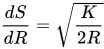
This means that time appears to pass in proportion to the square root of the perceiver's real historic period, rather than directly proportional. Nether this model, a 55-year-erstwhile would subjectively experience time passing 2¼ times more apace than an 11-year-onetime, rather than v times under the previous. This ways the following periods in life would appear to exist quantitatively equal: ages 0–1, ane–4, 4–9, 9–16, 16–25, 25–36, 36–49, 49–64, 64–81, 81–100, 100–121.[105] [107]
In a study, participants consistently provided answers that fit this model when asked about time perception at 1/4 of their age, merely were less consistent for 1/2 of their age. Their answers suggest that this model is more accurate than the previous one.[105]
A consequence of this model is that the fraction of subjective life remaining is always less than the fraction of existent life remaining, merely it is e'er more than than ane half of existent life remaining.[105] This can be seen for and :



Furnishings of drugs on fourth dimension perception [edit]
Stimulants such as thyroxine, caffeine, and amphetamines lead to overestimation of time intervals by both humans and rats, while depressants and anesthetics such every bit barbiturates, nitrous oxide can have the opposite result and atomic number 82 to underestimation of time intervals.[108] The level of activity in the brain of neurotransmitters such as dopamine and norepinephrine may be the reason for this.[109] [110] [111] A research on stimulant-dependent individuals (SDI) showed several abnormal fourth dimension processing characteristics including larger time differences for effective duration discrimination, and overestimating the duration of a relatively long time interval. Altered fourth dimension processing and perception in SDI could explain the difficulty SDI have with delaying gratification.[112] Another research studied the dose-dependent outcome in methamphetamine dependents with short term abstinence and its effects on time perception. Results shows that motor timing merely not perceptual timing, was contradistinct in meth dependents, which persisted for at least three months of abstinence. Dose-dependent effects on time perception were but observed when short-term abstinent meth abusers processed long fourth dimension intervals. The study concluded that time perception alteration in meth dependents is chore specific and dose dependent.[113]
The effect of cannabis on time perception has been studied with inconclusive results mainly due to methodological variations and the paucity of research. Even though seventy% of time estimation studies report over-interpretation, the findings of time production and time reproduction studies remain inconclusive.[114] [115] Studies show consistently throughout the literature that virtually cannabis users self-report the experience of a slowed perception of time. In the laboratory, researchers take confirmed the result of cannabis on the perception of time in both humans and animals.[116] Using PET Scans it was observed that participants who showed a decrease in cerebellar CBF also had a pregnant alteration in time sense. The relationship between decreased cerebellar flow and impaired time sense is of involvement as the cerebellum is linked to an internal timing organisation.[117] [118] In improver, a marijuana user may underestimate the speed of a motor vehicle, increasing the chances of accident. [ commendation needed ]
Furnishings of trunk temperature [edit]
The chemic clock hypothesis implies a causal link between body temperature and the perception of time.[119]
Past work bear witness that increasing torso temperature tends to make individuals experience a dilated perception of time and they perceive durations longer than they actually did, ultimately leading them to under-judge time durations. While decreasing torso temperature has the opposite consequence – causing participants to experience a condensed perception of time leading them to over-guess fourth dimension duration – observations of the latter type were rare.[120] Research establishes a parametric effect of trunk temperature on time perception with higher temperatures more often than not producing faster subjective fourth dimension and vice versa. This is specially seen to be truthful under changes in arousal levels and stressful events.[121]
Applications [edit]
Since subjective time is measurable, through information such every bit heartbeats or actions taken inside a time period, there are analytical applications for fourth dimension perception.
[edit]
Time perception can be used every bit a tool in social networks to define the subjective experiences of each node within a arrangement. This method can be used to study characters' psychology in dramas, both motion picture and literature, analyzed by social networks. Each character's subjective time may be calculated, with methods every bit simple equally word counting, and compared to the real time of the story to shed light on their internal states.[122] [123]
See also [edit]
- Time
- Pointer of time
- Fourth dimension dilation
- Déjà vu
- Dyschronometria
- Benjamin Libet
- Temporal resolution
- Time perspective (Wikiversity)
References [edit]
- ^ Evans 5 (2013). Linguistic communication and time: a cognitive linguistics arroyo. Cambridge: Cambridge University Press. ISBN978-one-107-04380-0.
- ^ Livni E (8 January 2019). "Physics explains why time passes faster as you age". Quartz . Retrieved 21 March 2019.
- ^ Knuckles Academy (21 March 2019). "It's leap already? Physics explains why fourth dimension flies every bit we age – A slowdown in image processing speeds up our perception of fourth dimension passing every bit we age". EurekAlert! . Retrieved 21 March 2019.
- ^ von Baer KE (1862). Welche Auffassung der lebenden Natur ist die richtige? [Which view of living nature is the right one?] (in German). Berlin: A. Hirschwald.
- ^ Buhusi CV, Cordes S (2011). "Fourth dimension and number: the privileged status of small-scale values in the encephalon". Frontiers in Integrative Neuroscience. five: 67. doi:10.3389/fnint.2011.00067. PMC3204429. PMID 22065383.
- ^ Le Poidevin R (Baronial 28, 2000). "The Experience and Perception of Time". Retrieved 2009-10-22 .
- ^ Friedman West (1990). Most time: inventing the fourth dimension. Cambridge, Mass.: MIT Printing. ISBN978-0-262-06133-9.
- ^ Friedman WJ (1993). "Retentivity for the time of by events". Psychological Bulletin. 113 (one): 44–66. doi:10.1037/0033-2909.113.1.44.
- ^ Falk D (January 2013). "Do Humans Have a Biological Stopwatch?". Smithsonian Magazine . Retrieved May ane, 2014.
- ^ a b c d Gozlan Thou (2 Jan 2013). "A stopwatch on the brain'due south perception of time". theguardian.com. Guardian News and Media Limited. Archived from the original on 4 January 2014. Retrieved iv January 2014.
- ^ James West (1893). The principles of psychology. New York: H. Holt and Company. p. 609. ISBN9780790599731.
- ^ Bearding (East. Robert Kelly, 1882) The Alternative: A Report in Psychology. London: Macmillan and Co. p. 168.
- ^ a b c Andersen H, Grush R (2009). "A brief history of fourth dimension-consciousness: historical precursors to James and Husserl" (PDF). Journal of the History of Philosophy. 47 (2): 277–307. CiteSeerX10.1.1.126.3276. doi:x.1353/hph.0.0118. S2CID 16379171. Archived from the original (PDF) on 2008-02-xvi. Retrieved 2008-02-02 .
- ^ Varela FJ (1999). Petitot J, Varela FJ, Pachoud B, Roy JM (eds.). "The specious present: A neurophenomenology of time consciousness". Naturalizing Phenomenology: Issues in Gimmicky Phenomenology and Cerebral Science. Stanford University Press. 64: 266–329.
- ^ Rao SM, Mayer AR, Harrington DL (March 2001). "The evolution of brain activation during temporal processing". Nature Neuroscience. four (3): 317–23. doi:10.1038/85191. PMID 11224550. S2CID 3570715.
- "Brain Areas Critical To Human being Fourth dimension Sense Identified". UniSci: Daily University Science News. 27 February 2001.
- ^ Rao SM, Mayer AR, Harrington DL (March 2001). "The evolution of brain activation during temporal processing". Nature Neuroscience. 4 (3): 317–23. doi:10.1038/85191. PMID 11224550. S2CID 3570715.
- ^ Heron J, Aaen-Stockdale C, Hotchkiss J, Roach NW, McGraw PV, Whitaker D (February 2012). "Duration channels mediate human being time perception". Proceedings. Biological Sciences. 279 (1729): 690–viii. doi:10.1098/rspb.2011.1131. PMC3248727. PMID 21831897.
- ^ Heron J, Hotchkiss J, Aaen-Stockdale C, Roach NW, Whitaker D (December 2013). "A neural hierarchy for illusions of time: duration accommodation precedes multisensory integration". Journal of Vision. 13 (fourteen): 4. doi:ten.1167/xiii.14.4. PMC3852255. PMID 24306853.
- ^ Eagleman DM (23 June 2009). "Brain Fourth dimension". Edge. Border Foundation. Archived from the original on 21 Dec 2013.
- ^ Macey SL (1994). Encyclopedia of Time (1st ed.). Routledge Publishing. p. 555. ISBN978-0-8153-0615-3.
- ^ Brockman M (2009). What'south Next?: Dispatches on the Future of Science . Us: Vintage Books. p. 162. ISBN978-0-307-38931-2.
- ^ Eagleman DM (2009-06-23). "Encephalon Time". Edge Foundation. Archived from the original on 2013-08-05.
- ^ Jaldow EJ, Oakley DA, Davey GC (September 1989). "Operation of Decorticated Rats on Stock-still Interval and Fixed Time Schedules". The European Journal of Neuroscience. 1 (5): 461–470. doi:10.1111/j.1460-9568.1989.tb00352.x. PMID 12106131. S2CID 19254667.
- ^ Mackintosh NJ (1994). Creature learning and cognition. Boston: Bookish Press. ISBN978-0-12-161953-4.
- ^ Cheng Thou, Crystal JD (1 January 2017). "i.12 – Learning to Time Intervals". Learning and Retention: A Comprehensive Reference (2d ed.). Academic Printing. pp. 203–225. doi:x.1016/b978-0-12-809324-5.21013-4.
- ^ Alger SJ (30 December 2013). "Metabolism and Torso Size Influence the Perception of Movement and Fourth dimension | Accumulating Glitches | Acquire Science at Scitable". Nature . Retrieved 30 January 2020.
- ^ Association P (sixteen September 2013). "Fourth dimension passes more than slowly for flies, study finds". The Guardian.
- ^ Healy M, McNally L, Ruxton GD, Cooper N, Jackson AL (Oct 2013). "Metabolic charge per unit and body size are linked with perception of temporal information". Animal Behaviour. 86 (4): 685–696. doi:10.1016/j.anbehav.2013.06.018. PMC3791410. PMID 24109147.
- ^ "Time perception varies betwixt animals". The Academy of Edinburgh. 2016.
- ^ Drew MR, Zupan B, Cooke A, Couvillon PA, Balsam PD (January 2005). "Temporal command of conditioned responding in goldfish". Periodical of Experimental Psychology: Animal Behavior Processes. 31 (one): 31–nine. doi:ten.1037/0097-7403.31.1.31. PMID 15656725.
- ^ Reebs SG (June 1996). "Time-identify learning in golden shiners (Pisces: Cyprinidae)". Behavioural Processes. 36 (3): 253–62. doi:10.1016/0376-6357(96)88023-v. PMID 24896874. S2CID 12061959.
- ^ Reebs SG (April 1999). "Time–identify learning based on food merely not on predation take chances in a fish, the inanga (Galaxias maculatus)". Ethology. 105 (four): 361–71. doi:10.1046/j.1439-0310.1999.00390.x.
- ^ Bateson Thousand, Kacelnik A (June 1997). "Starlings' preferences for predictable and unpredictable delays to food". Animal Behaviour. 53 (vi): 1129–42. doi:10.1006/anbe.1996.0388. PMID 9236010. S2CID 1998063.
- ^ Wilkie DM, Willson RJ (March 1992). "Fourth dimension-place learning by pigeons, Columba livia". Journal of the Experimental Assay of Behavior. 57 (2): 145–58. doi:ten.1901/jeab.1992.57-145. PMC1323118. PMID 16812650.
- ^ Saksida LM, Wilkie DM (June 1994). "Time-of-day discrimination past pigeons, Columba livia". Brute Learning & Beliefs. 22 (2): 143–54. doi:ten.3758/BF03199914.
- ^ García-Gallardo D, Aguilar Guevara F, Moreno Due south, Hernández M, Carpio C (November 2019). "Show of not-cyclic timing in a low response-cost daily Time-Place Learning task with pigeons Columba Livia". Behavioural Processes. 168: 103942. doi:10.1016/j.beproc.2019.103942. PMID 31470061. S2CID 201646652.
- ^ Roberts WA, Cheng K, Cohen JS (January 1989). "Timing lite and tone signals in pigeons". Journal of Experimental Psychology: Animate being Behavior Processes. 15 (ane): 23–35. doi:ten.1037/0097-7403.15.1.23. PMID 2926333.
- ^ Rehn T, Keeling LJ (January 2011). "The consequence of time left alone at home on dog welfare". Applied Animal Behaviour Scientific discipline. 129 (2–4): 129–35. doi:x.1016/j.applanim.2010.11.015.
- ^ Fuhrer Due north, Gygax L (September 2017). "From minutes to days-The power of sows (Sus scrofa) to judge time intervals". Behavioural Processes. 142: 146–155. doi:10.1016/j.beproc.2017.07.006. PMID 28735073. S2CID 4934919.
- ^ Church RM, Gibbon J (April 1982). "Temporal generalization". Journal of Experimental Psychology: Fauna Behavior Processes. viii (2): 165–86. doi:10.1037/0097-7403.eight.two.165. PMID 7069377.
- ^ Carr JA, Wilkie DM (April 1997). "Rats use an ordinal timer in a daily time-place learning task". Periodical of Experimental Psychology: Creature Behavior Processes. 23 (2): 232–47. doi:10.1037//0097-7403.23.2.232. PMID 9095544.
- ^ Mistlberger RE, de Groot MH, Bossert JM, Marchant EG (November 1996). "Discrimination of circadian phase in intact and suprachiasmatic nuclei-ablated rats". Brain Research. 739 (1–2): 12–viii. doi:ten.1016/s0006-8993(96)00466-0. PMID 8955919. S2CID 37473154.
- ^ Seeley TD, Tovey CA (February 1994). "Why search time to find a food-storer bee accurately indicates the relative rates of nectar collecting and nectar processing in dear bee colonies". Animal Behaviour. 47 (2): 311–vi. doi:10.1006/anbe.1994.1044. S2CID 53178166.
- ^ Seeley T (1995). The wisdom of the hive: the social physiology of honey bee colonies. Harvard University Press. ISBN978-0674953765.
- ^ Dispersyn G, Pain L, Challet E, Touitou Y (November 2008). "General anesthetics furnishings on circadian temporal structure: an update". Chronobiology International. 25 (6): 835–50. doi:10.1080/07420520802551386. PMID 19005891. S2CID 24234839.
- ^ Cheeseman JF, Winnebeck EC, Millar CD, Kirkland LS, Sleigh J, Goodwin Thousand, Pawley Doctor, Bloch Chiliad, Lehmann Chiliad, Menzel R, Warman GR (May 2012). "General anesthesia alters time perception by phase shifting the circadian clock". Proceedings of the National University of Sciences of the United States of America. 109 (eighteen): 7061–6. Bibcode:2012PNAS..109.7061C. doi:ten.1073/pnas.1201734109. PMC3344952. PMID 22509009.
- ^ Boisvert MJ, Sherry DF (August 2006). "Interval timing by an invertebrate, the bumble bee Bombus impatiens". Electric current Biology. 16 (16): 1636–forty. doi:10.1016/j.cub.2006.06.064. PMID 16920625.
- ^ Cammaerts MC, Cammaerts R (2016). "Ants Tin can Await the Fourth dimension of an Event on Basis of Previous Experiences". International Scholarly Research Notices. 2016: 9473128. doi:10.1155/2016/9473128. PMC4923595. PMID 27403457.
- ^ "It Seems Similar Only Yesterday: The Nature and Consequences of Telescoping Errors in Marketing Research". Journal of Consumer Psychology.
- ^ Wearden JH, Todd NP, Jones LA (October 2006). "When do auditory/visual differences in duration judgements occur?". Quarterly Periodical of Experimental Psychology. 59 (x): 1709–24. doi:x.1080/17470210500314729. PMID 16945856. S2CID 16487453.
- ^ Goldstone S, Lhamon WT (August 1974). "Studies of auditory-visual differences in homo time judgment. i. Sounds are judged longer than lights". Perceptual and Motor Skills. 39 (1): 63–82. doi:10.2466/pms.1974.39.one.63. PMID 4415924. S2CID 27186061.
- ^ Penney TB (2003). "Modality differences in interval timing: Attending, clock speed, and memory". In Meck WH (ed.). Functional and neural mechanisms of interval timing. Frontiers in Neuroscience. Vol. 19. Boca Raton, FL: CRC Printing. pp. 209–233. doi:ten.1201/9780203009574.ch8. ISBN978-0-8493-1109-three.
- ^ Wearden JH, Edwards H, Fakhri M, Percival A (May 1998). "Why "sounds are judged longer than lights": application of a model of the internal clock in humans" (PDF). The Quarterly Journal of Experimental Psychology. B, Comparative and Physiological Psychology. 51 (2): 97–120. doi:10.1080/713932672 (inactive 28 February 2022). PMID 9621837. Archived (PDF) from the original on 2013-04-21.
{{cite periodical}}: CS1 maint: DOI inactive as of Feb 2022 (link) - ^ Goldreich D (28 March 2007). "A Bayesian Perceptual Model Replicates the Cutaneous Rabbit and Other Tactile Spatiotemporal Illusions". PLOS I. 2 (3): e333. Bibcode:2007PLoSO...2..333G. doi:10.1371/journal.pone.0000333. PMC1828626. PMID 17389923.
- ^ Wada Y, Masuda T, Noguchi K, 2005, "Temporal illusion chosen 'kappa effect' in event perception" Perception 34 ECVP Abstract Supplement
- ^ Cicchini K, Binda P and Morrone M (2009). "A model for the distortions of space and time perception during saccades". Frontiers in Systems Neuroscience. 3. doi:10.3389/conf.neuro.06.2009.03.349.
- ^ Yarrow K, Haggard P, Heal R, Brown P, Rothwell JC (November 2001). "Illusory perceptions of infinite and fourth dimension preserve cross-saccadic perceptual continuity" (PDF). Nature. 414 (6861): 302–5. Bibcode:2001Natur.414..302Y. doi:x.1038/35104551. PMID 11713528. S2CID 4358096.
- ^ Yarrow K, Whiteley Fifty, Rothwell JC, Haggard P (February 2006). "Spatial consequences of bridging the saccadic gap". Vision Inquiry. 46 (4): 545–55. doi:10.1016/j.visres.2005.04.019. PMC1343538. PMID 16005489.
- ^ Knöll J, Morrone MC, Bremmer F (May 2013). "Spatio-temporal topography of saccadic overestimation of time". Vision Inquiry. 83: 56–65. doi:10.1016/j.visres.2013.02.013. PMID 23458677.
- ^ a b Yarrow Yard, Rothwell JC (July 2003). "Transmission chronostasis: tactile perception precedes physical contact" (PDF). Current Biology. 13 (xiii): 1134–ix. doi:x.1016/S0960-9822(03)00413-five. PMID 12842013. S2CID 11426392.
- ^ Yarrow M, Johnson H, Haggard P, Rothwell JC (June 2004). "Consistent chronostasis furnishings across saccade categories imply a subcortical efferent trigger". Journal of Cognitive Neuroscience. sixteen (5): 839–47. doi:10.1162/089892904970780. PMC1266050. PMID 15200711.
- ^ "The mystery of the stopped clock illusion". BBC - Futurity - Health -. 2012-08-27. Archived from the original on 2013-01-xx. Retrieved 2012-12-09 .
- ^ Nijhawan R (2010). Infinite and Time in Perception and Action. Cambridge, United kingdom of great britain and northern ireland: Cambridge University Printing. ISBN978-0-521-86318-vi.
- ^ Hodinott-Colina I, Thilo KV, Cowey A, Walsh V (October 2002). "Auditory chronostasis: hanging on the phone". Current Biology. 12 (20): 1779–81. doi:10.1016/S0960-9822(02)01219-8. PMID 12401174.
- ^ Kotler South (12 Apr 2010). "When Life Flashes Before Your Eyes: A 15-Story Drop to Study the Encephalon's Internal Timewarp". Popular Science. Bonnier Corporation. Archived from the original on 11 October 2014.
- ^ Eagleman DM, Sejnowski TJ (2007). "Flash-Lag Effect". Eagleman Laboratory for Perception and Action. Archived from the original on 2014-08-01.
- ^ Patel SS, Ogmen H, Bedell HE, Sampath 5 (November 2000). "Flash-lag upshot: differential latency, not postdiction" (PDF). Science. 290 (5494): 1051a–1051. doi:10.1126/scientific discipline.290.5494.1051a. PMID 11184992. Archived from the original (PDF) on 2014-08-08.
- ^ Khoei MA, Masson GS, Perrinet LU (January 2017). "The wink-lag effect equally a move-based predictive shift". PLOS Computational Biology. 13 (1): e1005068. Bibcode:2017PLSCB..13E5068K. doi:10.1371/journal.pcbi.1005068. PMC5268412. PMID 28125585.
- ^ Rose D, Summers J (1995). "Duration illusions in a train of visual stimuli". Perception. 24 (10): 1177–87. doi:10.1068/p241177. PMID 8577576. S2CID 42515881.
- ^ a b c Tse PU, Intriligator J, Rivest J, Cavanagh P (October 2004). "Attention and the subjective expansion of time". Perception & Psychophysics. 66 (7): 1171–89. doi:10.3758/BF03196844. PMID 15751474.
- ^ a b New JJ, Scholl BJ (February 2009). "Subjective time dilation: spatially local, object-based, or a global visual experience?". Journal of Vision. 9 (2): 4.one–eleven. doi:x.1167/9.two.four. PMID 19271914.
- ^ a b c van Wassenhove Five, Buonomano DV, Shimojo S, Shams L (Jan 2008). "Distortions of subjective fourth dimension perception within and across senses". PLOS ONE. 3 (ane): e1437. Bibcode:2008PLoSO...three.1437V. doi:10.1371/journal.pone.0001437. PMC2174530. PMID 18197248.
- ^ Ulrich R, Nitschke J, Rammsayer T (March 2006). "Perceived duration of expected and unexpected stimuli". Psychological Research. seventy (two): 77–87. doi:x.1007/s00426-004-0195-iv. PMID 15609031. S2CID 30907517.
- ^ Chen KM, Yeh SL (March 2009). "Asymmetric cross-modal effects in time perception" (PDF). Acta Psychologica. 130 (3): 225–34. doi:ten.1016/j.actpsy.2008.12.008. PMID 19195633.
- ^ Seifried T, Ulrich R (January 2010). "Does the disproportion effect inflate the temporal expansion of odd stimuli?". Psychological Enquiry. 74 (1): ninety–8. doi:10.1007/s00426-008-0187-x. PMID 19034503. S2CID 21596966.
- ^ a b Aaen-Stockdale C, Hotchkiss J, Heron J, Whitaker D (June 2011). "Perceived time is spatial frequency dependent". Vision Research. 51 (11): 1232–8. doi:ten.1016/j.visres.2011.03.019. PMC3121949. PMID 21477613.
- ^ Stetson C, Cui 10, Montague PR, Eagleman DM (September 2006). "Motor-sensory recalibration leads to an illusory reversal of action and awareness" (PDF). Neuron. 51 (5): 651–9. doi:10.1016/j.neuron.2006.08.006. PMID 16950162. S2CID 8179689. Archived from the original (PDF) on 2013-09-28.
- ^ Eagleman DM (April 2008). "Human time perception and its illusions". Current Opinion in Neurobiology. 18 (two): 131–6. doi:ten.1016/j.conb.2008.06.002. PMC2866156. PMID 18639634.
- ^ Yamamoto S, Kitazawa S (July 2001). "Reversal of subjective temporal order due to arm crossing" (PDF). Nature Neuroscience. 4 (seven): 759–65. doi:10.1038/89559. PMID 11426234. S2CID 2667556. Archived (PDF) from the original on 2015-04-02.
- ^ Sambo CF, Torta DM, Gallace A, Liang 1000, Moseley GL, Iannetti GD (February 2013). "The temporal order judgement of tactile and nociceptive stimuli is dumb by crossing the hands over the body midline" (PDF). Pain. 154 (2): 242–vii. doi:ten.1016/j.pain.2012.10.010. PMID 23200703. S2CID 17657371. Archived (PDF) from the original on 2013-09-28.
- ^ Takahashi T, Kansaku K, Wada M, Shibuya Southward, Kitazawa S (August 2013). "Neural correlates of tactile temporal-order judgment in humans: an fMRI study". Cerebral Cortex. 23 (8): 1952–64. doi:x.1093/cercor/bhs179. PMID 22761307.
- ^ "Ready, steady, slow! Why top sportsmen might have 'more fourth dimension' on the ball". ucl.ac.uk. University Higher London. vi September 2012.
- ^ Amato I (7 June 2018). "When Bad Things Happen in Slow Motion". Nautilus (science magazine) . Retrieved 7 June 2018.
- ^ Marinho Five, Oliveira T, Rocha K, Ribeiro J, Magalhães F, Bento T, et al. (March 2018). "The dopaminergic system dynamic in the time perception: a review of the show". The International Journal of Neuroscience. 128 (3): 262–282. doi:x.1080/00207454.2017.1385614. PMID 28950734. S2CID 8176967.
- ^ Rudd One thousand, Vohs KD, Aaker J (October 2012). "Awe expands people'due south perception of fourth dimension, alters decision making, and enhances well-being" (PDF). Psychological Science. 23 (10): 1130–6. CiteSeerX10.1.1.650.9416. doi:10.1177/0956797612438731. PMID 22886132. S2CID 9159218.
- ^ a b Radford, Benjamin; Frazier, Kendrick (January 2017). "Felt Time: The Psychology of How Nosotros Perceive Fourth dimension". Skeptical Inquirer. 41 (i): 60–61.
- ^ "David dives in". justRegional publishing. xiii Jul 2013. Archived from the original on 26 Baronial 2016. Retrieved 13 July 2013.
- ^ Geoghagen T (2007-08-02). "Turn back the clock". BBC News Magazine.
- ^ Why top sport stars might accept 'more fourth dimension' on the ball by Jonathan Amos Science correspondent, BBC News
- ^ Eagleman D, Pariyadath 5 (2009). "Is subjective elapsing a signature of coding efficiency?". Philosophical Transactions of the Royal Social club B: Biological Sciences. 364 (1525): 1841–1851. doi:10.1098/rstb.2009.0026. PMC2685825. PMID 19487187.
- ^ Bar-Haim Y, Kerem A, Lamy D, Zakay D (2010). "When time slows down: The influence of threat on time perception in anxiety". Cognition and Emotion. 24 (2): 255–263. doi:10.1080/02699930903387603. S2CID 43861351.
- ^ Tse PU, Intriligator J, Rivest J, Cavanagh P (October 2004). "Attention and the subjective expansion of time". Perception & Psychophysics. 66 (7): 1171–89. doi:ten.3758/bf03196844. PMID 15751474.
- ^ Choi CQ (11 Dec 2007). "Why Fourth dimension Seems to Slow Down in Emergencies". Live Science.
- ^ Gil S, Droit-Volet S (February 2009). "Fourth dimension perception, low and sadness" (PDF). Behavioural Processes. 80 (two): 169–76. doi:10.1016/j.beproc.2008.eleven.012. PMID 19073237. S2CID 15412640. Archived from the original (PDF) on 2014-01-04.
- ^ a b Stetson C, Fiesta MP, Eagleman DM (Dec 2007). "Does time actually wearisome downwards during a frightening result?". PLOS One. 2 (12): e1295. Bibcode:2007PLoSO...two.1295S. doi:10.1371/journal.pone.0001295. PMC2110887. PMID 18074019.
- ^ Arstila, Valtteri (2012). "Time Slows Down during Accidents". Frontiers in Psychology. three: 196. doi:10.3389/fpsyg.2012.00196. PMC3384265. PMID 22754544.
- ^ Taylor, Steve. "Why accidents and emergencies seem to dramatically slow down time". theconversation.com. The Conversation U.s., Inc.
- ^ Hagura, N; Kanai, R; Orgs, Yard; Haggard, P (2012). "Ready steady deadening: activeness training slows the subjective passage of time". Proceedings. Biological Sciences. Proceedings of the Majestic Society B. 279 (1746): 4399–406. doi:10.1098/rspb.2012.1339. PMC3479796. PMID 22951740.
- ^ Droit-Volet S, Fayolle SL, Gil Due south (2011). "Emotion and time perception: effects of film-induced mood". Frontiers in Integrative Neuroscience. 5: 33. doi:10.3389/fnint.2011.00033. PMC3152725. PMID 21886610.
- ^ Dreher JC, Meyer-Lindenberg A, Kohn P, Berman KF (September 2008). "Age-related changes in midbrain dopaminergic regulation of the human reward organisation". Proceedings of the National Academy of Sciences of the United states of america of America. 105 (39): 15106–11. doi:ten.1073/pnas.0802127105. PMC2567500. PMID 18794529.
- ^ Bäckman L, Nyberg L, Lindenberger U, Li SC, Farde Fifty (2006). "The correlative triad among aging, dopamine, and noesis: current status and future prospects". Neuroscience and Biobehavioral Reviews. 30 (6): 791–807. doi:x.1016/j.neubiorev.2006.06.005. hdl:11858/00-001M-0000-0024-FF03-0. PMID 16901542. S2CID 16772959.
- ^ Meck WH (June 1996). "Neuropharmacology of timing and time perception" (PDF). Brain Research. Cerebral Brain Research. 3 (iii–iv): 227–42. doi:10.1016/0926-6410(96)00009-2. PMID 8806025. Archived from the original (PDF) on 2013-10-29.
- ^ Kolb B, Mychasiuk R, Muhammad A, Li Y, Frost Practice, Gibb R (October 2012). "Experience and the developing prefrontal cortex". Proceedings of the National Academy of Sciences of the United States of America. 109 Suppl ii: 17186–93. doi:10.1073/pnas.1121251109. PMC3477383. PMID 23045653.
- ^ Cooper BB (2013-07-02). "The science of time perception: stop it slipping away by doing new things". The Buffer Blog. Archived from the original on 2013-08-xvi.
- ^ a b c d e f Lemlich, Robert (1975-08-01). "Subjective acceleration of fourth dimension with aging". Perceptual and Motor Skills. 41 (1): 235–238. doi:10.2466/pms.1975.41.i.235. PMID 1178414. S2CID 20017140. Retrieved 2020-12-24 .
- ^ Adler R (1999-12-25). "Look how time flies . . ". New Scientist. Archived from the original on 2011-06-fourteen. Retrieved 2009-x-22 .
- ^ Jo DiLonardo 1000 (1994-02-06). "Time Does Fly As We Grow Older". Chicago Tribune. Archived from the original on 2016-04-25.
- ^ "Time perception - Personality traits". Encyclopedia Britannica . Retrieved 2020-06-06 .
- ^ Gozlan Chiliad (two January 2013). "A stopwatch on the brain'southward perception of time". theguardian.com. Guardian News and Media Limited. Archived from the original on 4 January 2014. Retrieved iv January 2014.
- ^ Marinho V, Oliveira T, Rocha Thou, Ribeiro J, Magalhães F, Bento T, et al. (March 2018). "The dopaminergic organization dynamic in the time perception: a review of the evidence". The International Journal of Neuroscience. 128 (iii): 262–282. doi:x.1080/00207454.2017.1385614. PMID 28950734. S2CID 8176967.
- ^ Rammsayer T (1989). "Is there a common dopaminergic footing of time perception and reaction fourth dimension?". Neuropsychobiology. 21 (one): 37–42. doi:10.1159/000118549. PMID 2573003.
- ^ Wittmann, Marc; Leland, David S.; Churan, January; Paulus, Martin P. (2007-x-08). "Impaired time perception and motor timing in stimulant-dependent subjects". Drug and Alcohol Dependence. 90 (ii–iii): 183–192. doi:10.1016/j.drugalcdep.2007.03.005. ISSN 0376-8716. PMC1997301. PMID 17434690.
- ^ Zhang, Mingming; Zhao, Di; Zhang, Zhao; Cao, Xinyu; Yin, Lu; Liu, Yi; Yuan, Ti-Fei; Luo, Wenbo (2019-10-01). "Time perception deficits and its dose-dependent effect in methamphetamine dependents with short-term abstinence". Science Advances. 5 (10): eaax6916. Bibcode:2019SciA....v.6916Z. doi:10.1126/sciadv.aax6916. ISSN 2375-2548. PMC6821467. PMID 31692967.
- ^ Atakan Z, Morrison P, Bossong MG, Martin-Santos R, Crippa JA (January 2012). "The effect of cannabis on perception of time: a critical review". Current Pharmaceutical Pattern. 18 (32): 4915–22. doi:10.2174/138161212802884852. PMID 22716134. S2CID 44522992.
- ^ Atakan, Zerrin; Morrison, Paul; Bossong, Matthijs G.; Crippa, Rocio Martin-Santos and Jose A. (2012-x-31). "The Effect of Cannabis on Perception of Time: A Disquisitional Review". Current Pharmaceutical Design. 18 (32): 4915–22. doi:x.2174/138161212802884852. PMID 22716134. Retrieved 2020-06-28 .
- ^ Stolick, Matt (2008). Otherwise Law-Abiding Citizens: A Scientific and Moral Assessment of Cannabis Use. Lexington Books. pp. 39–41.
- ^ Mathew, Roy J; Wilson, William H; Thousand. Turkington, Timothy; Coleman, R. Edward (1998-06-29). "Cerebellar activity and disturbed time sense subsequently THC". Brain Inquiry. 797 (2): 183–189. doi:10.1016/S0006-8993(98)00375-viii. ISSN 0006-8993. PMID 9666122. S2CID 40578680.
- ^ Stella, Nephi (2013-08-01). "Chronic THC intake modifies cardinal cerebellar functions". The Journal of Clinical Investigation. 123 (viii): 3208–3210. doi:10.1172/JCI70226. ISSN 0021-9738. PMC3967658. PMID 23863631.
- ^ Wearden, J.H.; Penton-Voak, I.Southward. (1995-05-01). "Feeling the Heat: Body Temperature and the Rate of Subjective Time, Revisited". The Quarterly Journal of Experimental Psychology Department B. 48 (2b): 129–141. doi:ten.1080/14640749508401443 (inactive 28 February 2022). ISSN 0272-4995. PMID 7597195.
{{cite journal}}: CS1 maint: DOI inactive as of February 2022 (link) - ^ J.H., Wearden; I.South., Penton-Voak (1995). "Feeling the heat: Body temperature and the rate of subjective fourth dimension, revisited". The Quarterly Journal of Experimental Psychology. Section B (2): 48(2b): 129–141. PMID 7597195.
- ^ Wearden, J. H.; Penton-Voak, I. S. (1995). "Feeling the rut: body temperature and the rate of subjective time, revisited". The Quarterly Journal of Experimental Psychology. B, Comparative and Physiological Psychology. 48 (ii): 129–141. ISSN 0272-4995. PMID 7597195.
- ^ Lotker, Z. (2016, August). The tale of 2 clocks. In 2016 IEEE/ACM International Conference on Advances in Social Networks Analysis and Mining (ASONAM) (pp. 768-776). IEEE Computer Society.
- ^ Lotker, Zvi (2021), "Car Narrative", Analyzing Narratives in Social Networks, Cham: Springer International Publishing, pp. 283–298, ISBN978-3-030-68298-nine , retrieved 2022-03-21
Farther reading [edit]
- Le Poidevin R (Winter 2004). "The Experience and Perception of Time". In Zalta EN (ed.). The Stanford Encyclopedia of Philosophy.
- Hodder A (1901). "Chapter Ii, The Specious Present". The adversaries of the sceptic; or, The specious nowadays, a new inquiry into human noesis. London: S. Sonnenschein &. pp. 36–56.
- Underwood G, Fellow RA (1973). "Selectivity of attention and the perception of duration". Perception. ii (1): 101–5. doi:ten.1068/p020101. PMID 4777562. S2CID 40724290.
- Brown SW, Stubbs DA (1992). "Attention and interference in prospective and retrospective timing". Perception. 21 (4): 545–57. doi:x.1068/p210545. PMID 1437469. S2CID 28277293.
- Eagleman DM, Tse PU, Buonomano D, Janssen P, Nobre AC, Holcombe AO (November 2005). "Time and the brain: how subjective fourth dimension relates to neural fourth dimension". The Periodical of Neuroscience. 25 (45): 10369–71. doi:10.1523/JNEUROSCI.3487-05.2005. PMC6725822. PMID 16280574.
- Slanger TG (1988). "Show for a Short-Period Internal Clock in Humans" (PDF). Periodical of Scientific Exploration. 2 (ii): 203–216. Archived from the original (PDF) on 2011-08-09. Retrieved 2011-x-02 . [ unreliable source? ]
- Le Poidevin R (2007). The images of time: an essay on temporal representation. Oxford, Great britain: Oxford University Press. ISBN978-0-19-926589-3.
External links [edit]
- Time perception inquiry at the University of Manchester
- Time Sense: Polychronicity and Monochronicity
- "A Cerebral Model of Retrospective Duration Estimations", Hee-Kyung Ahn, et al., March vii, 2006.
- "Time, Force, Motion, and the Semantics of Natural Languages", Wolfgang Wildgen, Antwerp Papers in Linguistics, 2003/2004.
- Can Time Deadening Downwardly?
- "Interactions emerge between biological clocks", The Pharmaceutical Journal, Vol 275 No 7376 p644, 19 November 2005 Registration required.
- Picture Space Time helps to add Time Perception to Photographs using sound
Source: https://en.wikipedia.org/wiki/Time_perception
0 Response to "Slowing Down the Clock a Review of Experimental Studies Investigating Psychological Time Dilation"
ارسال یک نظر